That Constant Hum of Anxiety
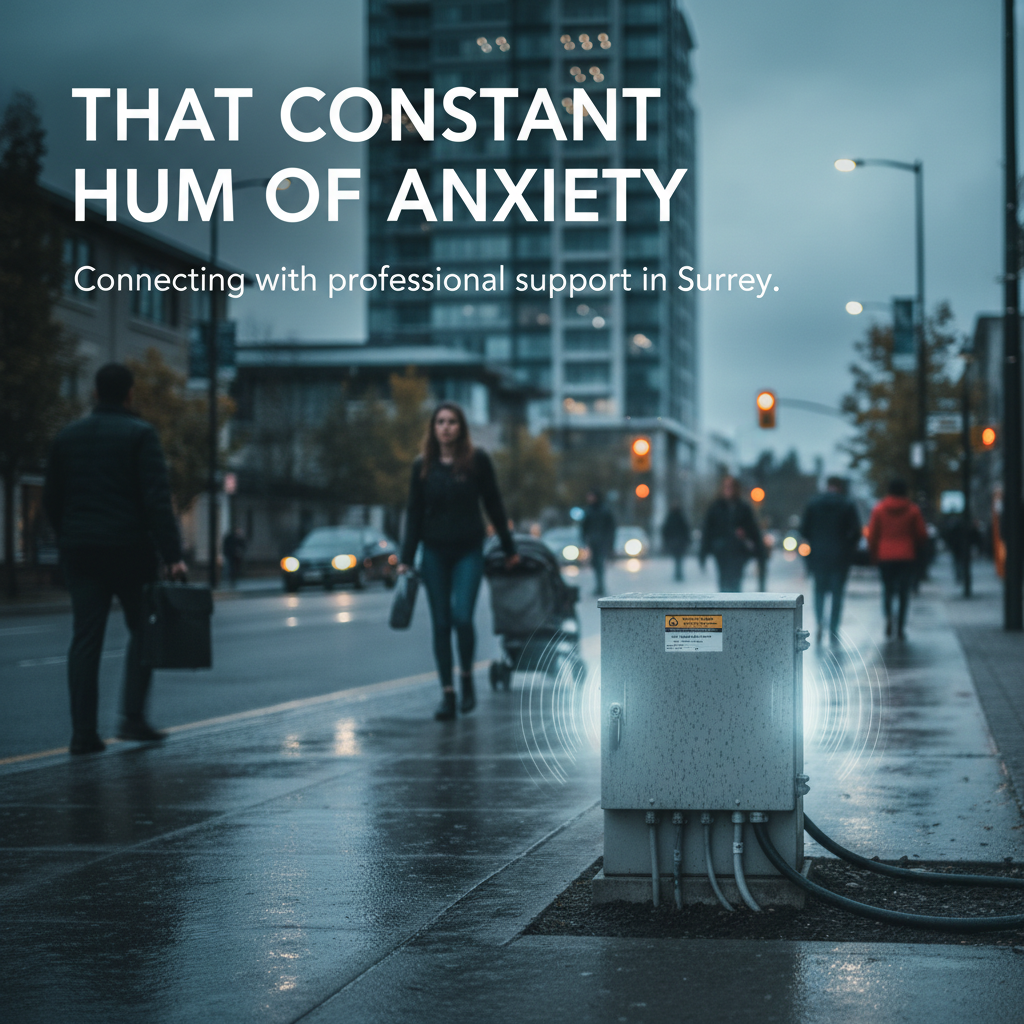
It’s not a full-blown panic. It’s more like a quiet, background hum. A low-grade feeling of unease that follows you around, even on a perfectly ordinary Tuesday. You might notice it while waiting for the kettle to boil, or in the car on the way to the supermarket in Guildford. A little knot in your stomach, a tightness in your chest.
And the most confusing part? There’s often no clear reason for it. Life might be objectively 'good'. The job is fine, the family is healthy, the bills are paid. So you ask yourself, “What have I got to be anxious about?” which quickly leads to feeling guilty or frustrated with yourself for not being able to just… relax.
This experience of feeling anxious without reason is something we talk about a lot with clients. It’s a common, and deeply frustrating, pattern. It’s almost as if your nervous system is stuck in a low 'on' position, constantly scanning for threats even when none exist.
Why Does This Happen?
Often, this isn't about one big, single cause. It’s usually the build-up of many small things. Think of all the tiny pressures you handle every day: the mental load of running a household, the performance expectations at work, the relentless news cycle, even the social pressure to seem like you’re coping perfectly.
Each one is manageable on its own. But together, they fill your capacity until there’s no room left. This is often the point where people find our articles on burnout or what happens when 'just getting on with it' isn't working anymore. That constant state of being switched on becomes your default setting.
Sometimes it’s also connected to the high standards we set for ourselves. The feeling that you have to keep all the plates spinning flawlessly can be exhausting. This internal pressure can create a persistent worry that you might drop one, which feels very similar to the ideas we explore in posts like 'When ‘Good Enough’ Feels Like Failing'.
How CBT Can Help With Managing Everyday Anxiety
So, what can be done? This is where a practical approach like Cognitive Behavioural Therapy (CBT) can be incredibly useful. The goal of CBT for anxiety isn’t to dig for a single, dramatic 'reason' for your feelings. Instead, it’s about understanding the process of anxiety itself.
We work with you to notice the connections between your thoughts, your physical feelings, and your behaviours. For example, we might explore:
- The thought: “I feel a bit on edge. Something must be wrong.”
- The feeling: A knot in your stomach, faster heart rate.
- The behaviour: You start mentally scanning your life for problems, which only increases the anxious feeling.
By mapping this out, you can start to intervene. You learn to challenge the unhelpful thoughts and develop new, more balanced ways of responding. It gives you practical tools for managing everyday anxiety, rather than feeling overwhelmed by it.
What Does Anxiety Counselling in Surrey Look Like?
Booking counselling for anxiety gives you a dedicated space to untangle these feelings. It’s a confidential, supportive environment where you don’t have to pretend you’re ‘fine’. Together, we can look at the patterns that keep you stuck, without judgment.
Our sessions are booked one at a time, so you’re always in control. There’s no long-term commitment. Many people in Surrey find that having this regular, focused time – whether online or face-to-face in locations like Woking or Cobham – makes a significant difference. Our fee is £68 for a full hour session.
If that constant hum of anxiety is taking up too much of your headspace, you don’t have to just put up with it. Taking the first step to understand it can be the start of turning the volume down.
If you'd like to explore how we can help, please get in touch to book an initial session. We'd be happy to answer any questions you may have.
Written by Sian Jones, Founder of CBT & Counselling Surrey. Sian has extensive experience helping individuals manage anxiety, stress, low mood and other emotional challenges.